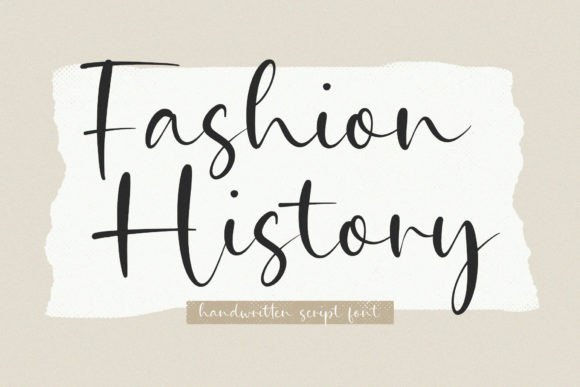
Bringing Elegance to Life with the Fashion History Font
The night is quiet, my desk lamp is warm, and my screen glows with the latest mockup for a series of candle labels. I'm scrolling through my font library, searching for that perfect final touch—the typography that will whisper 'luxury' and 'handcrafted' without shouting. That's when I find it, nestled among the scripts: Fashion History. I drag it into the design, and suddenly, the label transforms. The fragrance name, "Velvet Rose," now flows across the paper with smooth, graceful curves. It feels less like a label and more like a promise. This is the moment I truly understood the power of a font.
The Personality of a Handwritten Masterpiece
Fashion History isn't just another script font. It's a mood. Its elegance is understated, defined by those fluid, connected strokes that feel both timeless and modern. There's a gentle charm to its letterforms—they carry the weight of careful penmanship without any harsh angles or overly dramatic flourishes. The overall style is incredibly stylish, yet approachable. It evokes the feeling of a boutique shop sign, a cherished journal entry, or the carefully penned details on a wedding invitation. For any maker looking to elevate their product's perceived quality, this font adds a layer of sophisticated, creative appeal that customers can see and feel.
A Font for Your Hands-On Creative World
When I think about applying Fashion History, my mind jumps to all the tangible items I—and so many other creators—bring to life. It’s a natural fit for anything that needs a touch of personal, elegant handwriting.
- Product Labels & Packaging: From apothecary-style candle jars to delicate perfume vial tags and boutique soap wrappers. The font makes the product name feel special.
- Stationery & Invitations: Wedding welcome signs, ceremony timelines, birthday party invites, and thank-you cards gain an immediate emotional appeal.
- Greeting Cards & Art Prints: A short, heartfelt message or a inspirational quote for printable wall art looks beautifully crafted.
- Branding & Shop Materials: Consistent use on your shop logo, banner, and social media graphics builds strong customer recognition.
- Home & Lifestyle Goods: Designs for mugs, tote bags, and decorative farmhouse-style signs carry that warm, handmade vibe.
- Digital Downloads: Planner covers, sticker sheet designs, and template previews for other makers benefit from the font’s editorial feel.
- Seasonal Designs: Holiday gift tags, Valentine's Day cards, and autumn market signage look cohesive and thoughtfully designed.
The key is understanding its role as a display font. It’s meant to shine on titles, names, short phrases, and decorative wording.
Seeing It in Action: Realistic Maker Examples
Let’s walk through a few concrete scenarios. For a set of linen-textured wedding invitations, I used Fashion History exclusively for the couple’s names and the event title “Celebration of Love.” Paired with a simple, clean sans serif font for all the practical details (date, time, location), the design achieved perfect balance—romantic yet readable.
Another project involved creating a cohesive line of ceramic coffee mugs for a small online shop. The shop’s name, rendered in Fashion History, became the central design element on every mug. That consistent typography across the product line created an instant brand identity, making the shop’s merchandise recognizable and premium.
Finally, for a digital printable—a set of motivational wall art quotes—I tested the font on phrases like “Begin Today.” Its smooth curves made the words feel like gentle encouragement, perfect for the aesthetic of the printable collection. It elevated the entire product’s presentation in the Etsy listing mockups.
Practical Advice for Readability & Pairing
Because of its elegant, connected script style, Fashion History is best used for larger text. On very small stickers or intricate product labels, I recommend using it for the primary product name only, not for lengthy descriptions. When printing physical cards or preparing designs for cutting machines like Cricut or Silhouette, always test a proof. Ensure the delicate strokes are clear and will cut or print well, especially on detailed wedding invitation scripts or small boutique tags.
Font pairing is where your design truly comes together. Fashion History, being a strong script, loves a supportive partner. I almost always pair it with a minimalist sans serif font (like a clean geometric style) for body text, details, and fine print. This combination keeps the elegance of the script front and center while ensuring all essential information is perfectly readable. For a more classic, editorial feel, a simple serif font can also work beautifully.
A Crucial Step for Selling Your Creations
Before using any font on physical products, templates, or digital downloads you intend to sell, verifying the license is non-negotiable. Always check that Fashion History comes with a commercial license that covers your intended use—whether it’s for merchandise, printables, or branding. Additionally, explore its included features. Does it have stylistic alternates or ligatures that can add unique flair to specific words? Knowing the supported file formats (like OTF, TTF) and any multilingual support ensures smooth integration into your design software, from Adobe Illustrator to Canva.
Embracing a font like Fashion History is about more than just choosing letters. It's about choosing the voice for your creations. It’s the silent ambassador for your brand, the first impression on your packaging, and the emotional hook in your designs. When you see it come to life on a freshly printed label or a beautifully assembled invitation suite, you understand that typography is a craft in itself—one that beautifully supports the craft of making.